
Dice games explained

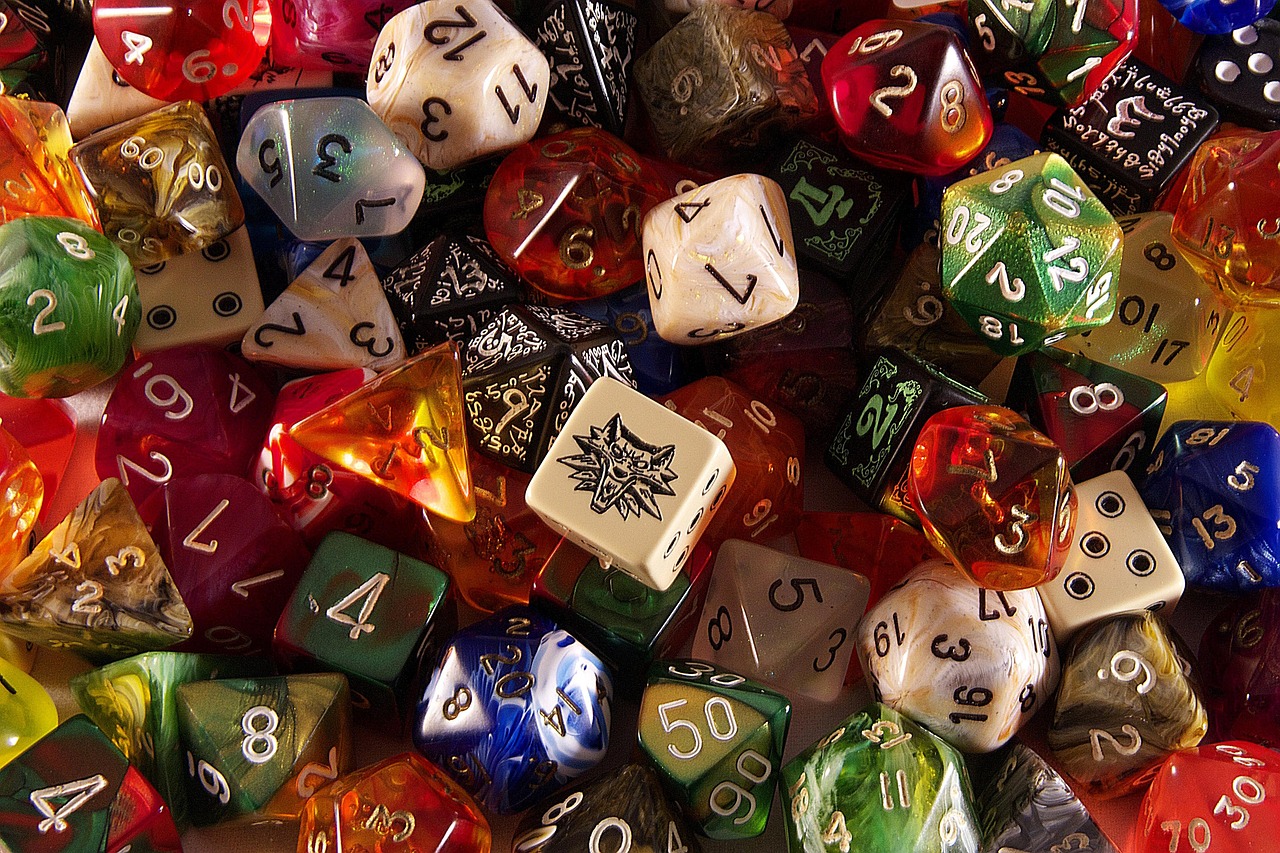
Dice games explained
Dice games are the least intimidating shelf in a game shop and the easiest to buy badly, because half a dozen very different designs all look like a tin with dice in it. The dice are the input; what differs is what you are allowed to do with a roll, and that is the entire game.
Three families cover most of the shelf.
Push-your-luck
Roll, decide whether to bank what you have or roll again, and risk losing it. The whole game is that one decision repeated, and it is genuinely tense because the choice is always yours rather than the dice’s.
These are the fastest to teach — the rule is one sentence — and the most reliably fun with people who do not normally play games. They are also short, which makes them ideal for the twenty-minute window most households actually have.
Set collection and category scoring
Roll a hand of dice, keep some, reroll the rest, and score by matching a printed category. The interest is in choosing which category to chase and when to give up on one, which is a considerably deeper decision than it first appears.
These are the classic family dice games and they scale well to large groups because the turn is quick and everybody watches everybody else’s rolls.
Roll-and-write
Everybody uses the same roll and marks their own sheet. That single change removes downtime entirely — nobody is waiting, because everybody acts on every roll — and it makes player count almost irrelevant.
They are also the most portable games in existence, since the components are dice and a pad, and they are the closest thing on this shelf to a puzzle.
Dice as a component in a larger game
Plenty of board games use dice without being dice games. The distinction that matters is whether a roll is the decision or merely the input to one. If the roll determines what happens, it is a dice game; if it determines what you may choose between, it is a board game with dice.
The second kind is usually longer and needs a table.
Luck, and how much of it there is
Dice games are often dismissed as pure luck, and that is true of very few of them. In a push-your-luck game the dice decide the outcome of a roll and you decide whether to roll — over a whole game, the decisions dominate. In a set-collection game the choice of which category to abandon is the entire skill.
What is fair to say is that any single round is heavily random, which is exactly why they work with mixed ability tables.
Component quality actually matters here
Dice are the one component you handle constantly, and cheap dice are noticeably worse: rounded edges roll unpredictably, poor printing wears off, and light plastic bounces off the table. On a game you will play weekly this is worth paying attention to.
A dice tray or a lid to roll into solves most of the practical problems and is worth having regardless.
Noise
Dice are loud, particularly on a hard table, and particularly in an apartment. A felt-lined tray or even a folded tea towel makes a considerable difference and costs nothing.
This is a real consideration for evening play in a building with neighbours, which in Bay Ridge is most buildings.
Player count
Most dice games are comfortable from two to six, and roll-and-write formats effectively have no upper limit. The constraint is usually the number of scorepads or dice supplied rather than the design.
Where a game caps the count, it is on the listing.
Teaching them
Deal the dice and start. Almost every dice game can be taught by playing one round openly, and almost none benefit from a rules explanation in advance. This makes them the right choice when somebody has arrived, is only staying an hour and has never played anything.
More on that approach in games that fit in twenty minutes.
Where to look
The shelf is dice games. For the same speed with cards instead, party card games, and for a table that wants to talk rather than roll, word and cooperative games.
Shipping is on the shipping policy page and the shop number is on the contact page.
Why the same five dice keep working
There is something slightly absurd about a category where dozens of genuinely different games ship with essentially the same components, and it is worth understanding why it holds up. A die produces a small, bounded, visible random result that everybody can verify instantly. No shuffling, no hidden information, no arguing about what happened. That transparency is what lets the rules be so light — the game does not have to manage trust, because everybody watched the roll.
It is also why dice games survive being played by people who have had a drink, by children who cannot read well yet, and by groups where somebody keeps leaving the table. The state of the game is always fully visible on the table, so anybody rejoining can see where things stand without being briefed. Very few other formats can say that.